.png?width=160&height=42&name=logo_color_Tag3%20(1).png "Return to Innervate homepage")

I’ve been in digital production for nearly two decades. I still have muscle memory from the days when a “video campaign” meant manually exporting the same 30-second spot fifteen different ways—praying that the codec didn’t break and the captions actually lined up.
The workflow was a grind: shoot, edit the master, resize, reframe, localize, swap headlines, and then do it all over again because the media team realized they needed six more vertical formats for social.
For years, the "big idea" wasn't the hard part. The hard part was the production gravity—the sheer weight of the manual labor required to get an idea onto a screen. AI is finally breaking that gravity, but not just by "making video." It’s doing something much more important than creative generation: Creative Orchestration.
The Numbers are Moving Faster Than We Are
AI isn't just "arriving" in marketing; it’s already moved in and rearranged the furniture.
- 88% of marketers are now using AI daily.
- Over 60% of enterprise teams ramped up their AI spend in 2025.
- Adoption is currently outperforming the early growth of the PC and the commercial internet.
But here’s the reality check: Speed without a plan is just a faster way to fail. If you use AI to pump out more content without fixing your underlying infrastructure, you don’t get efficiency. You get creative chaos.
The Bottleneck Wasn't the "Creative"—It Was the Friction
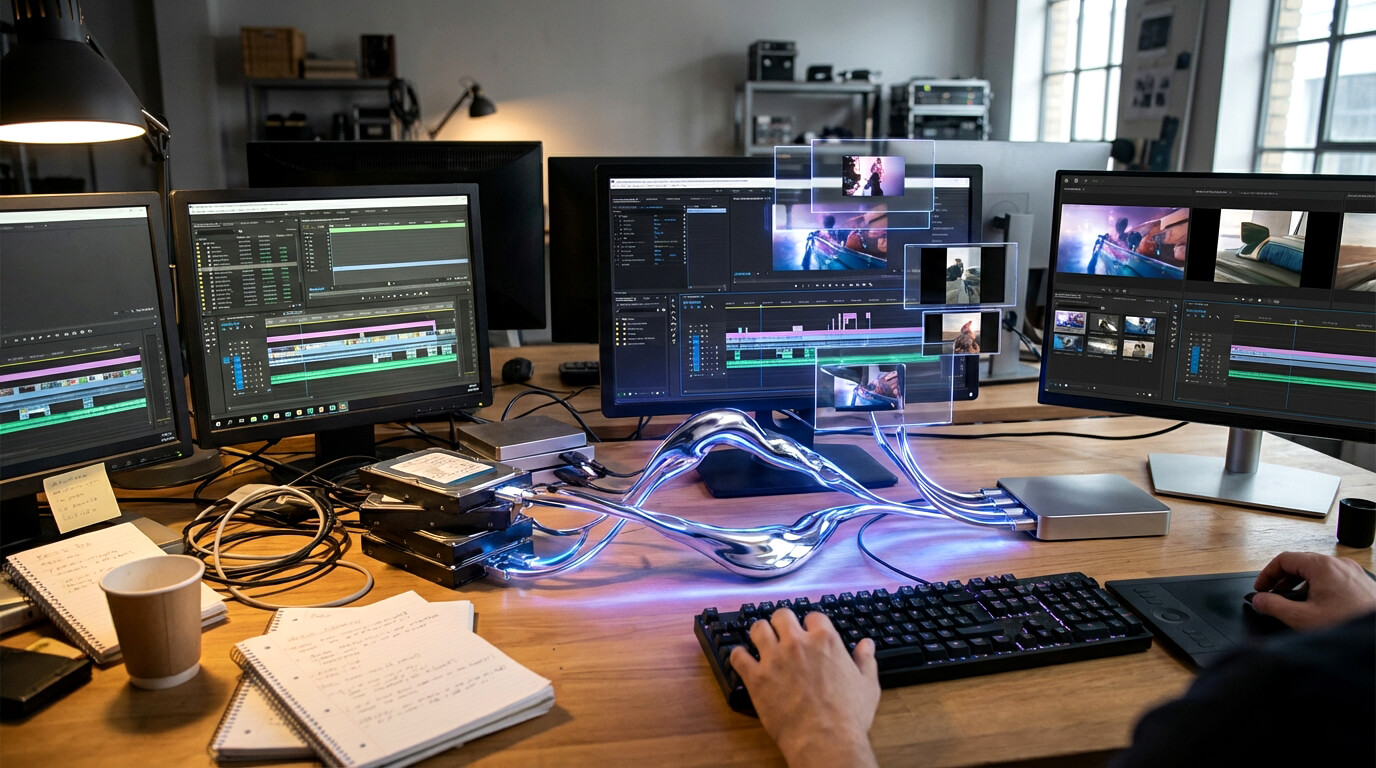
If you ask a producer where their day actually goes, they’ll tell you it’s rarely spent on "the craft." It’s spent on the friction:
- Hunting through messy folders for last year’s b-roll.
- Rebuilding assets that someone else already made but no one can find.
- Manually babysitting exports for dozens of platform specs.
- Fixing brand "oopsies" at the eleventh hour.
AI didn't create these silos, but it has certainly exposed how fragile they are.
Deconstructing the Video "Black Box"
One of the coolest shifts I’ve seen is video intelligence. We used to treat a video file as a finished, static object. Now, AI looks at video like a creative engineer. It can:
- Auto-detect scene changes and break a master into individual shots.
- Extract components like logos, text overlays, and dialogue.
- Recognize composition, allowing for "smart reframing" that keeps the subject centered, whether it's on a 16:9 TV or a 9:16 TikTok.
Suddenly, a 30-second master ad becomes a kit of parts, aka modular content. In minutes, you have your YouTube bumpers, your Reels, your Snapchat stories, and your outdoor digital boards. Creative teams can finally stop acting like production machines and start acting like strategic directors.
Scaling Without Losing the Soul (or the Brand)
There is a massive risk here: If you let AI generate ads wildly, you’re going to end up with "Frankenstein" content that ignores your brand guidelines. Global brands live and die by their typography, legal disclaimers, and specific color hex codes.
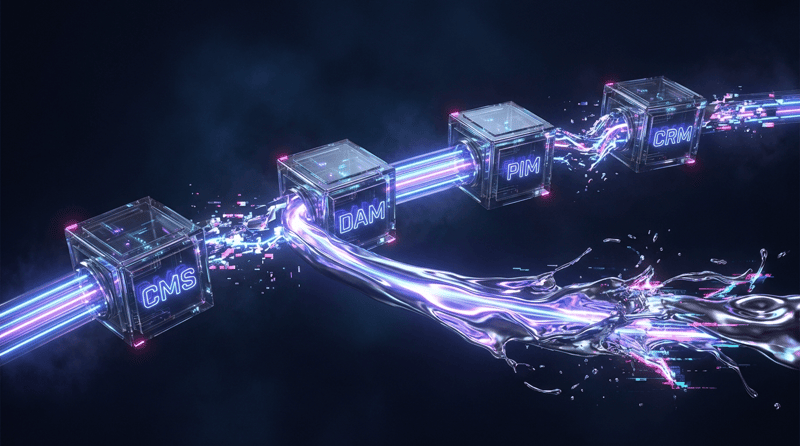
This is where the concept of Orchestration—and platforms like Innervate—become essential. You need a system that connects the "making" with the "governing."
By linking creative production to brand guardrails and media delivery, you can move fast without breaking the brand. AI-generated variants can be automatically checked for compliance before they ever hit a viewer's screen.
The Era of the Adaptive Campaign
Historically, advertising was static: Launch it and hope for the best. Testing was slow, expensive, and usually too late to matter.
We’re moving toward Adaptive Video Campaigns. Instead of one fixed video, we’re launching systems.
- Different headlines for different audiences.
- Different pacing for different attention spans.
- Creative that actually learns and evolves based on how people are interacting with it.
The Bottom Line
After 20 years in this game, I’ve seen plenty of "revolutions" that were just shiny new toys. AI feels different because it’s forcing us to fix the broken infrastructure that has held digital production back for decades.
The real question is no longer whether to use AI, but whether your infrastructure actually allows it to work. We are currently in a "consolidation phase" where the financial stakes are higher than ever. The 2026 Creative Industry Trends Report from FunctionFox showed that last year, 46% of agencies reported a revenue decline—a significant 11-point drop from the year prior.
Despite the speed of AI, half of all agencies report no measurable impact on their bottom line yet. This gap exists because productivity gains are being swallowed by inefficient workflows and over-servicing. At the same time, trust in automated systems remains a hurdle; only 31% of agencies feel they can accurately forecast their performance or revenue beyond three months. Orchestration fixes this by connecting production directly to performance data, turning AI from a "cool experiment" into a financial engine that actually moves the needle on your internal KPIs and delivers the quality and relevance your customers actually want.
For people like us, that means less time staring at progress bars and more time doing what we actually love: creating ideas that truly connect.