AI was supposed to give creative teams their time back. For most agencies, it just moved it from making to fixing.
There's a statement from our research with NewtonX that I haven't been able to shake. An agency VP we surveyed put it plainly:
"AI generates volume, but often misses nuanced brand voice and compliance guardrails. We spend nearly as much time editing and aligning outputs as we would creating from scratch."
Nearly as much time as creating from scratch. Read that again as a creative leader. It means the hours didn't disappear. They moved from making to fixing.
I call it the editing tax. Every creative team running AI at volume is paying it, and most of us are paying it quietly.
The numbers behind the feeling
We surveyed 100 senior leaders at independent agencies serving enterprise and global brands. When we asked what's slowing deeper AI adoption, uncertainty about output quality and brand safety was the most-cited barrier: 64% put it in their top three.
When we let them answer in their own words, the pattern got sharper. Roughly one in four named inconsistent, off-brand, or off-brief output as the single biggest challenge to scaling creative with AI. Not cost. Not client resistance. The work itself.
The verbatim quotes read as if they came out of the same production meeting:
- "Our teams spend significant time reviewing and correcting AI outputs to ensure they align with client standards, which erodes the efficiency gains we expected."
- "AI often produces content that's off-brief or misses nuanced emotional cues, forcing our teams into heavy editing loops."
- "AI can speed up production, but we still need strong human oversight, approval workflows, and governance."
Why the tax lands on creative
Here's what the efficiency pitch leaves out. When a model produces 200 variants in minutes, someone still has to review all 200. Someone has to notice the logo lockup is wrong in 40 of them, the tone drifts in 30, and the legal line is missing in 12.
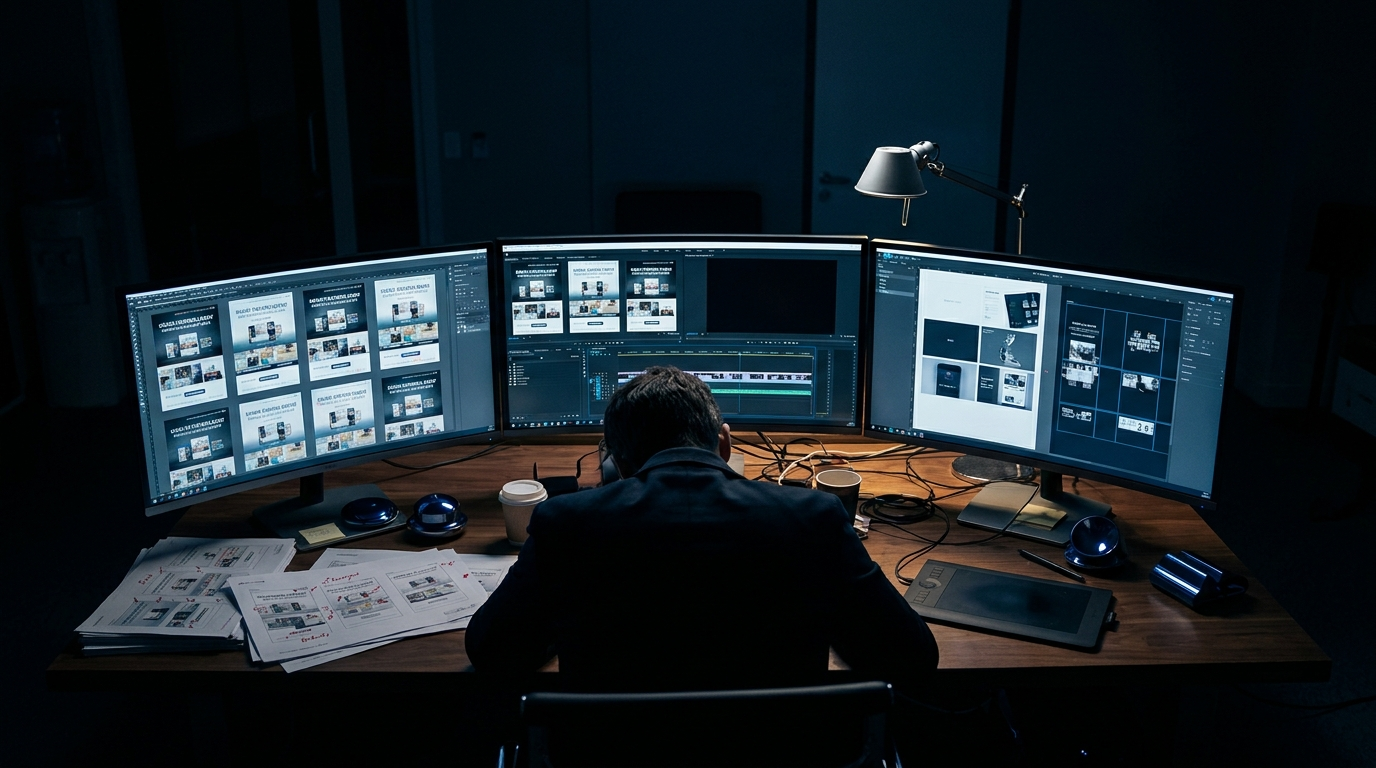
That someone is usually a designer, a copywriter, or an ACD. We hired them for their taste, now we're paying for it in QA.
Picture a typical multi-market launch. The generation takes an afternoon. Then the alignment starts: a round to fix the lockups, a round to pull the tone back, a round for legal copy, and another for the client's comments on all of the above. The calendar barely moved. The work just changed shape.
This is what worries me most as a Creative Director. Fixing is a different emotional job than making. Making builds energy. Fixing drains it. A team that spends its week correcting machine output doesn't just lose hours. It loses its appetite for the work.
Better prompts won't fix this
The instinct is to treat the editing tax as a skills problem. Write sharper prompts, build a better prompt library, train the team.
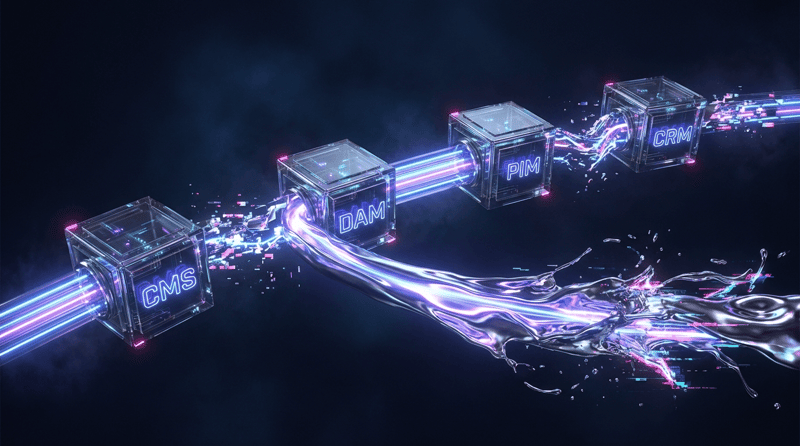
That helps at the margins. But it misses where the problem lives. The brand guidelines, the client's legal lines, and the tone of voice all sit outside the generation step: in a PDF, in a senior creative's head, in a Slack thread from last spring. The model never sees them. So it guesses, and people clean up after the guess.
The fix is structural. Brand rules need to live upstream, inside the system that does the generating, so output starts closer to right instead of being dragged there at the end.
What changes when the brand goes upstream
When the rules travel with the work, three things happen:
- Review becomes judgment, not inspection. Creatives look at whether an idea is good, not whether the hex code is right.
- Rework drops where it costs most, in the late rounds where a missed guideline means a re-render, a re-route and a re-approval.
- The efficiency gain everyone promised actually survives to the end of the pipeline.
The agencies that win the next few years won't be the ones generating the most. They'll be the ones who stopped paying the editing tax.
Over the next seven pieces, I'll dig into what the research says about why the tax exists and what it takes to stop paying it. Next up: why we pointed AI at the most fun part of the job, and left the grind exactly where it was.
James Massey is Creative Director at Innervate. This series draws on the 2026 Innervate × NewtonX Benchmark Report of 100 senior leaders at independent digital advertising agencies in North America and the UK.